From Nature to Research: The Cultivation of Lavender
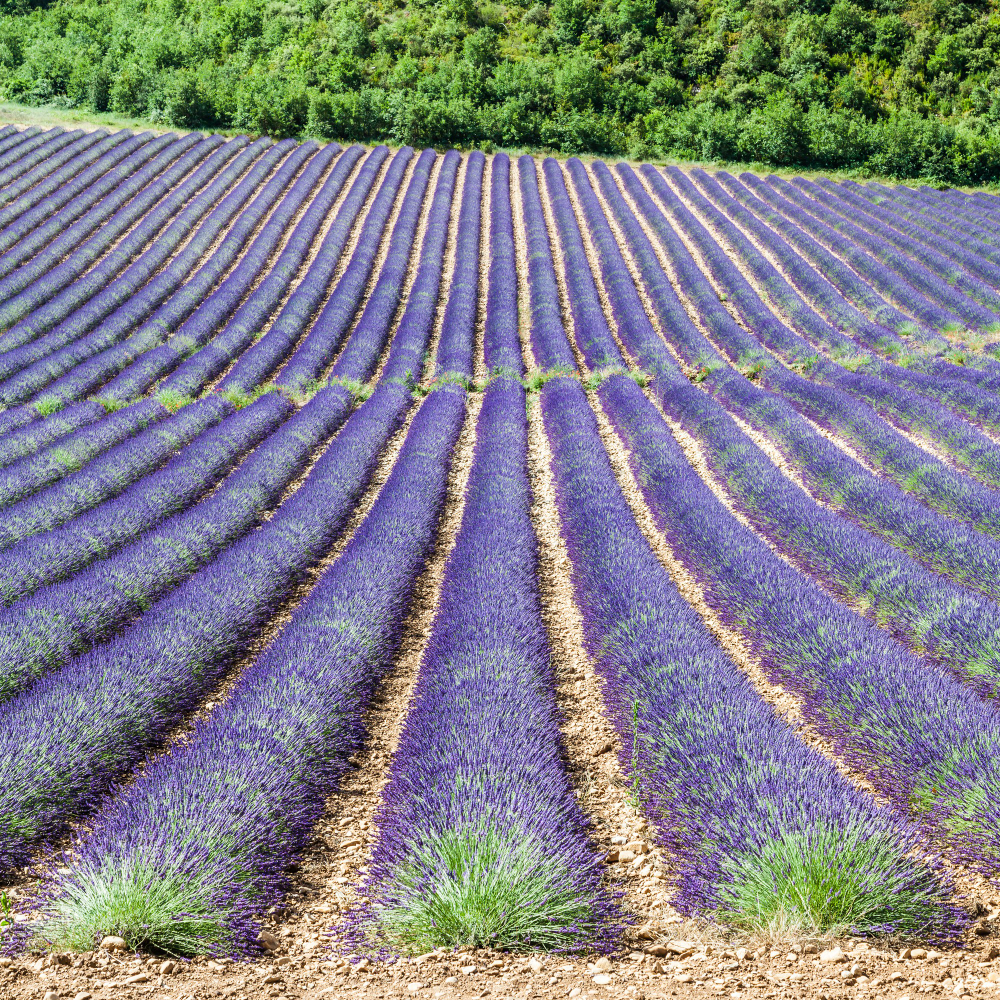
The lavender used in our project was cultivated in the Rodolivos area of Serres, on a local producer’s farm, with the Lavandula angustifolia variety—known for its quality and high essential oil content.
The sowing took place in January 2021, while the harvesting was done in June 2022, at the time when the flowers reach the peak of their natural essential oil content. The harvesting process was carried out using machinery, ensuring uniformity and precision.
Immediately afterwards, the harvested lavender was sent to the other members of the research team for further processing and study. Our goal is to utilize the by-products from the oil extraction in order to highlight their beneficial properties and incorporate them into innovative food products.
Lavender Processing: Distillation & Drying with Scientific Precision
After receiving the lavender, the processing begins with the aim of utilizing every valuable component of the plant.
Distillation is carried out using the hydro-distillation method with a specialized Clevenger-type apparatus. This process produces two main products:
- lavender essential oil (in a mixture with water)
- and the plant residue (waste plant tissue)
Next, the plant residue is filteredto remove excess liquids, and then dried at 40°C in a specialized drying oven.
During the drying process:
- Samples are taken every hour over a 12-hour period
- The moisture content of each sample is measured
- The drying curveis created—a useful tool for optimizing process control and ensuring the quality of the final extract.
This process is environmentally friendly and enables the utilization of by-products that were previously considered waste, highlighting the potential of green technology in the agri-food sector.
Assessment of Phenolic Content & Antioxidant Capacity
Once the drying of the plant residue is completed, we move on to the next critical stage: the recovery of natural extracts through ultrasound-assisted extraction..
This method allows for the isolation of bioactive compounds, with particular interest in:
- Phenolic compounds
- Antioxidant capacity (ability to neutralize free radicals)
What we study at this stage:
We examine how the antioxidant properties of the extract are affected by two key factors:
- Moisture content of the sample before extraction
- The following moisture levels are tested: 15%, 8% και 5%
- Grinding particle size of the dried residue
- Sieves of 1 mm and 4 mm are used to study the effect of particle size on the extraction yield.
Our goal is to identify the optimal combination of conditions that provides maximum bioactivity and phenolic content, with the ultimate aim of using these extracts in functional dairy products..
Lavender Extraction: Ultrasound vs. Microwaves
The plant residue from lavender distillation undergoes ultrasound extractionusing n ultrasonic homogenizer,aiming to recover bioactive compounds..
During the process, the following are determined:
- Total phenolic content
- Antioxidant activity (DPPH assay)
- Reducing power (FRAP assay)
At the same time, microwave extractionis performed to compare the two techniques in terms of extraction yield and extract quality.
The purpose is to identify the most efficient and “green” methodsuitable for industrial application.
Drying & Encapsulation of Extract
The extract from the ultrasound treatment is concentrated using a rotary evaporator and then spray-driedto obtain the dry extract in powder form..
At the same time, maltodextrin is tested as an encapsulating agent to evaluate its effect on:
- the process yield
- the physicochemical properties of the final powder
The goal is a stable, functional product suitable for use in foods.
Physicochemical Characterization of Dry Extracts
The dry extracts obtained from the drying process undergo physicochemical analysis to assess their quality.
Specifically, the following are determined:
- Moisture content
- Bulk density
- Hygroscopicity (moisture absorption tendency)
- Water activity (aw)
Additionally, antioxidant activity and the total phenolic contentare evaluated to ensure the bioactivity of the final product.
Pilot Application of Extraction & Encapsulation
At this stage, large quantities of lavender waste from distillation undergo undergoes ultrasound extractionapplying the optimal conditions identified in previous stages. The process is repeated as many times as needed to fully process the available raw material.
The extract:
- Is concentrated using a rotary evaporator
- Is spray-driedwith the addition of 10% w/v maltodextrin for encapsulation
At the same time, alternative encapsulation methodsare being explored, such as:
- Alginate-based methods
- Co-crystallization with the solid lavender residue
The goal is to produce a stable, user-friendly product on a pilot scale, ready for incorporation into foods or supplements.
Production of Functional Yogurt with Lavender Extract
For the development of the functional food, cow’s milk is used, which:
- Is heated to 90°C for 20 minutes with continuous stirring.
- Is cooled to 42–45°C.
- The following are added:
- Culture of Lactobacillus and Streptococcus thermophilus (0.3 g/L of milk)
- Dry lavender extract in quantities of 0.1–1 g per 150 ml
The mixture is incubated at 42°C for 4–5 hours, until lactic fermentation is completed and the pH reaches 4.6 or lower (but not below 4).
The final products (yogurts):
- Are stored in the refrigerator
- Are tested for antioxidant and anti-inflammatory activity
The goal is to produce a functional dairy productwith added nutritional value and commercial potential.
Characterization of the Functional Yogurt Ask ChatGPT
The final product, namely the yogurt with lavender extract, is evaluated both physicochemically and biologically to confirm its functionality.
What is determined:
- Total phenolic content
- Antioxidant capacity
- Anti-inflammatory activity
Biological evaluation (in vivo):
Tests are conducted on mice with administration of the lavender extract to study:
- The lipid profile
- The glycemic index
The purpose is to confirm the promising biofunctional properties of the product under real biological conditions.